
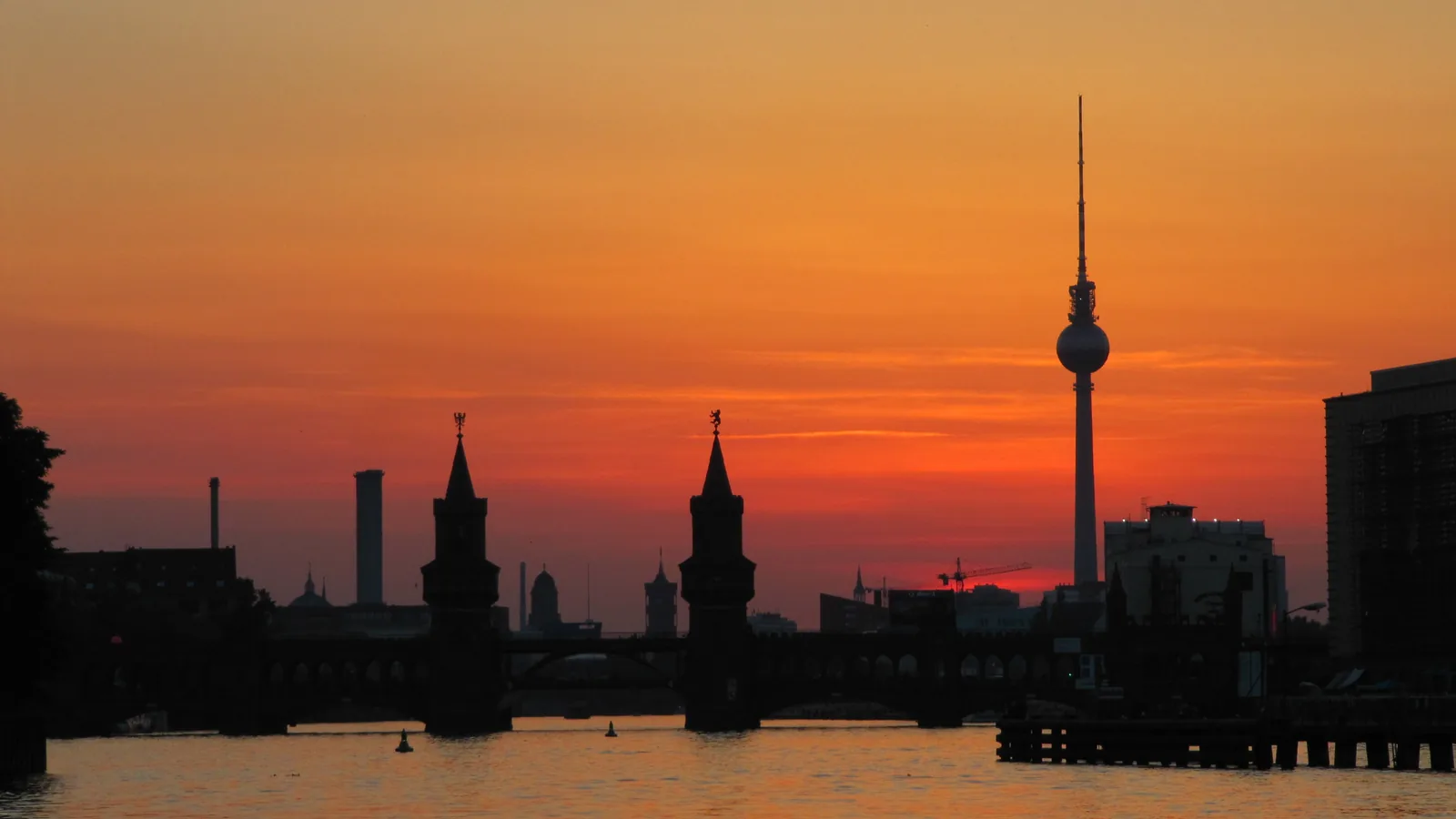
Car transport
Car transport to Berlin
640 kilometres to Berlin: one driving day, no tolls. And one sticker that has to be green before you cross the S-Bahn Ring.
Why this route
One driving day, and east instead of south
Berlin lies about 640 kilometres away. That is six to seven hours on the A1, A30 and A2, one driving day, no hotel night. It is the only German destination on this site that lies east rather than south, on a completely different route from Frankfurt or Munich.
It is also the city where a car is most useful and hardest to park at the same time. Berlin is bigger than Amsterdam, Rotterdam, Utrecht and The Hague combined; Spandau to Köpenick is further than Utrecht to Rotterdam. Anyone staying longer than a weekend finds that the public transport is good but the distances stay large.
The formality is the same as elsewhere in Germany: the Umweltplakette. Berlin requires the green one, and the zone lies inside the S-Bahn Ring, which is nearly everything you think of as Berlin. Without a plakette the fine is around € 80 to € 100, Dutch plate or not.
Your route
Netherlands → Berlin
One direct drive from the Netherlands, your own car, one dedicated driver, from your door to the destination. Every other destination in Europe I drive just as readily.
direct route · 1 dedicated driver
Price indication — Berlin
One-way
~ 640 km · ~ 1 driving days
- Driver fee
- € 380
- Travel expenses (calculated up front, no mark-up)
- € 510
- Total (indicative)
- ± € 1.080
incl. 21% VAT · ± € 890 excl. VAT
Return (combi)
~ 640 km · ~ 2 driving days
- Driver fee
- € 760
- Travel expenses (calculated up front, no mark-up)
- € 850
- Total (indicative)
- ± € 1.950
incl. 21% VAT · ± € 1.610 excl. VAT
Prices may vary slightly due to variable costs such as hotel, fuel and tolls.
Who sends a car here
Four situations where this works
Berlin draws a different crowd from Frankfurt or Munich: longer stays, more culture, more people living there temporarily rather than passing through.
A longer stay or a second home
For Dutch people Berlin is a city where you spend months rather than days: a project, a course, an apartment. On a stay like that, having the car brought out costs less than weeks of hire, and you drive your own car instead of whatever is available.
Fairs at the Messe Berlin
ITB in March is the world's largest travel fair and IFA in September Europe's largest consumer electronics show; both run on the site under the Funkturm. In those weeks hotels are booked across the whole city and arriving near the Messegelände is slow.
The Berlinale and the Marathon
The Berlinale in February imposes its own agenda on the city in and around Mitte, and the Berlin Marathon in late September closes off much of the centre, including the route past the Brandenburg Gate. On those days I pin the delivery address down precisely.
Concerts and matches
The Olympiastadion in the west and the Waldbühne in the Grunewald draw crowds from across northern Germany and Poland. Both sit far from the centre and are easier to reach by car than by public transport, certainly when it runs late.
The route
Six hundred and forty kilometres, in one day
On the A1, A30 and A2, a different road from every other German destination.
- 01
Checking the Umweltplakette
Before departure
Berlin requires the green plakette. The sticker is compulsory for every vehicle entering the zone, Dutch plates included, and is tied to the registration. Without it the fine is around € 80 to € 100. I check and arrange one if it is missing.
- 02
Collection in the Netherlands
Morning
I collect the car where it stands, walk round it with you and photograph its condition at departure. The same procedure as on any other run, whatever the distance.
- 03
On the A1 and A30
± 200 km
Across the border at Oldenzaal via Hengelo, then the A30 to Osnabrück. Quieter than the A3 past Cologne, and usually the untroubled part of the day.
- 04
On the A2 through Lower Saxony
± 480 km
From Osnabrück along the A2 past Hanover, Braunschweig and Magdeburg to Berlin. This is northern Germany's heaviest freight corridor, with a lot of overtaking lorries and long-running roadworks in places. I plan around it rather than gambling on it.
- 05
Into the Ring and delivery
End of the day
The Umweltzone begins at the S-Bahn Ring. With the green plakette that is no problem. I deliver to the agreed address, with photographs of the condition on arrival, and then fly home from Berlin Brandenburg, which has several direct flights a day to the Netherlands all year. That ticket is in the price.
Practical points
Berlin wants the green plakette
The Umweltplakette is compulsory for every vehicle entering a German Umweltzone regardless of the country of registration, and the sticker is tied to the registration rather than the driver. Berlin requires the green one, the strictest category, and the zone lies inside the S-Bahn Ring, nearly everything people mean by Berlin, from Mitte to Kreuzberg, Friedrichshain and Prenzlauer Berg. Without it the fine is around € 80 to € 100.
Germany has no toll for cars
There is no vignette and there are no toll barriers on the Autobahn. That makes the cost of this run simple: fuel and my time, nothing else. France, Italy, Spain, Switzerland and Austria always add something; this one does not.
The A2 is the unpredictable part
Nearly five hundred of the six hundred and forty kilometres sit on the A2 between Osnabrück and Berlin, northern Germany's heaviest freight corridor. There are stretches with long-running roadworks and a great deal of overtaking lorry traffic. That is no reason to plan the run differently, but it is a reason to set the departure time around it rather than trusting a navigation system's estimate.
Recurring events
ITB in March is the world's largest travel fair and IFA in September Europe's largest consumer electronics show; both on the Messe site under the Funkturm. The Berlinale fills February and the Berlin Marathon in late September closes off much of the centre. In those periods hotels are dearer and the city slower, so I plan more generously and agree the delivery address more precisely.
Luggage travels with it
No trailer is involved, so whatever fits in your car comes along. On a stay of months that saves a separate shipment, and nothing has to be left at home because it would not fit in a case.
Compare your options
The same car from the Netherlands to Southern Europe, three ways, three price tags. With a trailer, watch which one you are comparing: riding along on a scheduled line from depot to depot is the cheapest there is, but a transporter making the run for your car alone charges per kilometre and bills the truck’s journey home as well. Between those two extremes sits a factor of five.
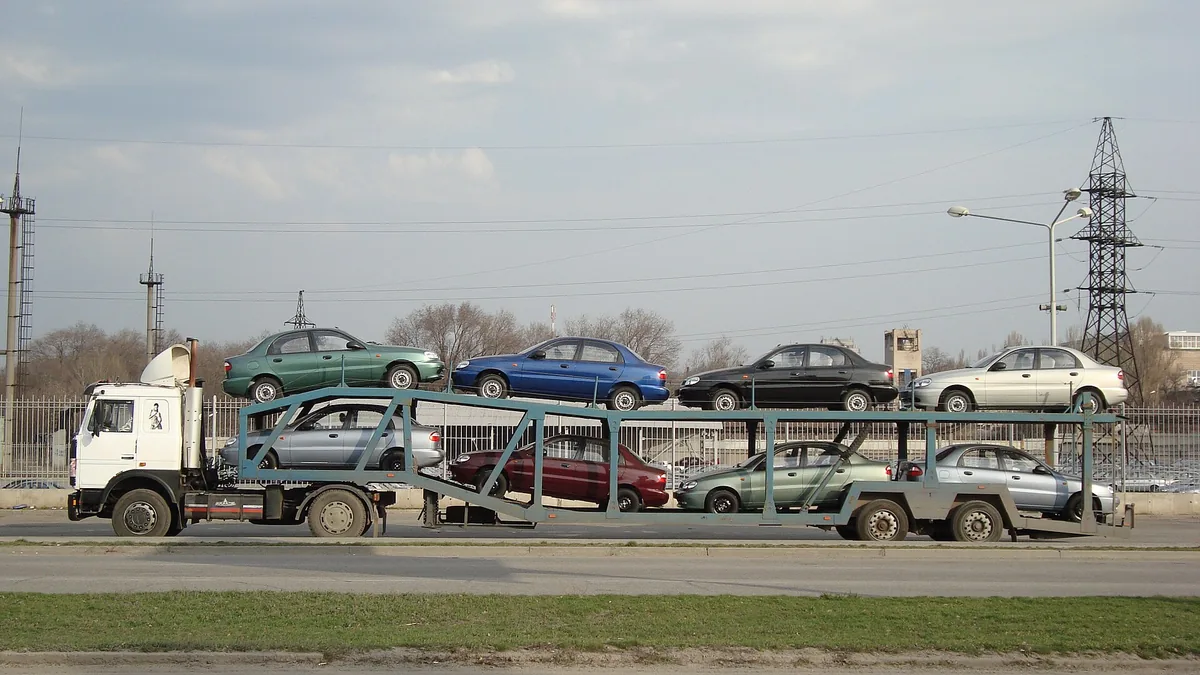
Trailer transport
€675 – 4,500 excl.
± 10 working days, or 2–3
- €675 – 850 if your car rides along on a scheduled line
- But then you take it to the depot yourself and collect it yourself on arrival, ten working days later
- If the transporter runs for your car alone, door to door, it goes per kilometre — open ± €0.95, enclosed ± €1.35 — and the truck’s journey home counts too. Utrecht–Marbella comes to ± €4,500
- Luggage in the car usually not allowed
Driving it yourself
± €0.25 per km + your time
± 2 – 3 days of your own
- You drive the whole route yourself
- Fuel and tolls come to roughly €0.25 per kilometre
- Plus a hotel night on the way and a flight back
- And two to three days of your own time
 Monarch Drive
Drive-it-Back
± €2,040 excl. for Utrecht–Marbella
± 3 days
- One dedicated driver drives your own car, door to door
- Half what a transporter charges to make that same run for your car alone
- On the day you choose, not the day the line departs
- Load the car with your own luggage
- 360° condition report + daily updates
Trailer prices, September 2026: the line prices from one large Dutch car transporter's own route pages, the door-to-door price from a Dutch specialist in exclusive car transport's own rate calculator. My figure is the indication from the calculator above for Utrecht–Marbella, one way. All amounts exclude VAT so they can be read side by side. Travel expenses are calculated up front and included in the fixed price, with no mark-up.
Frequently asked
What people ask about this route
The green one, the strictest category. The zone lies inside the S-Bahn Ring, which amounts to virtually the whole city as people know it. The plakette applies to Dutch plates too and belongs to the registration, not the driver. Without it the fine is around € 80 to € 100.
No. Germany has no toll for cars and no vignette. On this run you pay only for fuel and my time.
Six to seven hours, so one driving day. With a morning departure your car is there the same evening. There is no hotel night in the price.
Yes. Potsdam, the Brandenburg lakes and the coast towards Rostock are within reach of the same run. Give me the address at booking and I will include it in the indication.
Yes. Berlin Brandenburg is one of the standing delivery points on this route. Tell me at booking which terminal or car park it concerns.
By air from Berlin Brandenburg, which has several direct flights a day to the Netherlands all year. That ticket is in the price.
How I safeguard your car
Clear about cover
Your own policy stays leading. Damage caused by me: I cover the excess up to €500. What I do not have is stated just as plainly.
Signed transport agreement
Every arrangement — excess, route, planning — recorded in writing beforehand.
360° condition report
Your car's condition fully documented with photos, before and on delivery.
Reply within 24 hours
A personal answer from one point of contact, not a call centre.
Elsewhere on the site
Other German destinations, or the rates first?
The other direction
And if your car needs to come back from Berlin?
Bringing your car back from Berlin costs ± € 1.340, against ± € 1.080 for the outbound run. Over this distance I travel to your car by train and those hours sit in the driver's fee; on the long routes I fly and that falls away. Otherwise it is the same trip, in reverse.
Ready to have your car transported safely?
Request your indication with no obligation. Within 24 hours you will have a personal reply.